

First published by Deutsches Institut für Japanstudien (DIJ)
Authors: Prof. Dr. Claudia Neu, Dr. Marc Weiland
Published 25/06/2026
We are facing a seemingly peculiar paradox: On the one hand, literature and culture, as well as architecture and energy policy, are increasingly interested in rural areas, seeing development potential there and discussing future societal options. On the other hand, the inhabitants of rural areas feel disproportionately “left behind” and forgotten by politicians. From both an internal and external perspective, the impression may arise that the future only exists outside of rural areas. Yet, there is a long tradition of cultural visions of rural future, including e.g. literary, cinematic, artistic, or other media-related artifacts. It has simply been largely neglected for a long time. Why? And in what ways can historical and contemporary rural utopias and dystopias influence social practice?
Urban Futures?
The future of modern societies has been and remains urban. At least, that’s the impression one might gain from examining literary, cultural, and media-historical works on the themes of the future and what lies ahead. Since the beginning of the 20th century, if modern societies want to learn about their own present and future, they have turned their gaze to and into the mayor cities. In this metropolis, and not only since Fritz Lang’s brilliant 1927 film, the utopian and dystopian visions and lines of flight of the respective time horizons become visible. Edward Bellamy, in his utopia Looking Backward, published in 1888, described the ideal of an industrially progressive and bureaucratically organized metropolitan society in which the central problems of the time, associated with increasingly accelerating industrialization and urbanization, had been solved. But in modern era, the metropolis does not merely serve as an vehicle for utopian visions of the future. Particularly during the course of the 20th century, which increasingly revealed itself as an “age of extremes”, according to historian Eric Hobsbawm1, it is rather the dystopias in and through which an increasingly pessimistic vision of the future is expressed and, indeed, situated within the major cities.
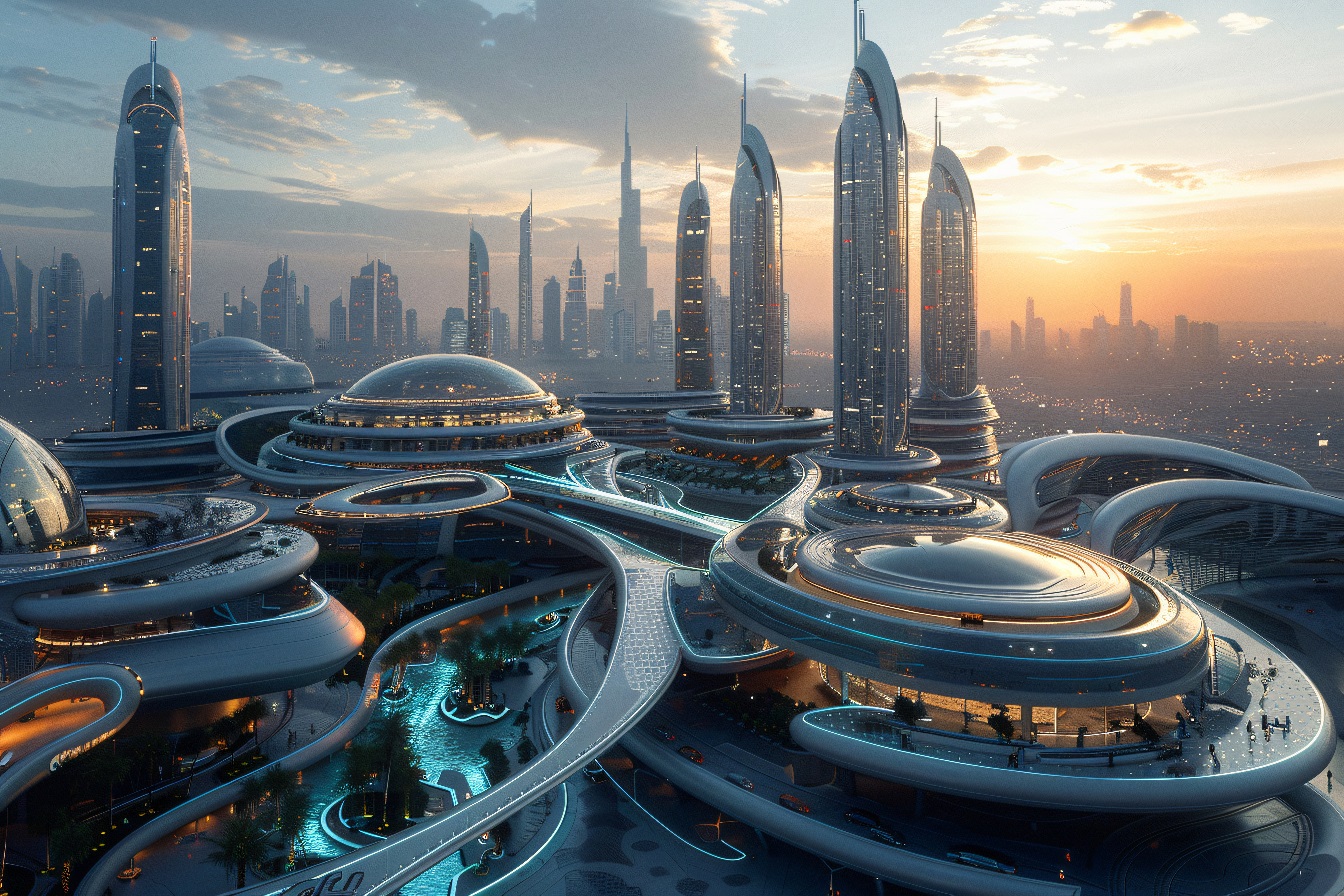
Fig. 1.: Futuristic landscape; licence-free image from Adobe Stock.
The defining texts of the genre, such as Yevgeny Zamyatin’s We (1920), Aldous Huxley’s Brave New World (1932), and George Orwell’s 1984 (1949) took the respective developments of their own time as their starting point—and anticipated their future evolution, which ultimately leads to the totalitarian nightmare of all-encompassing centralization and surveillance of both the individual and society. In this context, the trend of locating the future exclusively in urban areas seems to be virtually unbroken. The media’s visions and narratives of an urbanized world correspond remarkably well with demographic projections. As early as 2015, the OECD described the 21st century (which at that time still had 85 years to go) as the “century of metropolises”2. And new technological surveillance methods and artificial intelligence appear to have long since overtaken earlier utopias.
Rural Futures?
For a long time, rural areas in modern societies were associated primarily with the past, especially with the “good old days”. One is almost tempted to believe that little has changed, given that the shelves of train station bookstores overflow with rural magazines vying with each other for recipes and floral arrangements. Yet, in book and television formats, a tried-and-tested literary and media narrative pattern is constantly reproduced, allowing its protagonist to return to their homeland—and thus, in a sense, to their own past. In popular culture, rural areas are often ascribed a constitutive continuity that bravely opposes the (destructive) dynamics of modernity. But is this really the only positive aspect of rural life?
When asked about their overall quality of life in their region, three-quarters of Germans expressed their satisfaction – particularly in rural areas. The picture changes, however, when asked about the regional provision of infrastructure and services. In this case, a third rate the provision as (very) poor – especially in rural areas. This dissatisfaction with regional public services is often reflected in a sense of being “left behind” and of loss3. The romanticized narratives of popular culture naturally do not align well with the everyday narratives of real life. Yet, the current popularity of literary rural narratives and novels creates and conveys quite nuanced and by no means one-sided – but rather largely realistic – images of rural areas; images that may also offer impulses and perspectives for future development.
ZumiKu Project (Future with Culture Project)
In the ZumiKu project (Future with Culture, www.uni-goettingen.de/ZumiKu), which is now nearing completion and was funded by the German Federal Ministry of Agriculture between 2023 and 2026, we sought to investigate three main areas:
- How and which kind rural futures have been (and are currently being) designed in culture and literature, both historically and in the present;
- Which narratives of the future prevail in everyday contexts and may even guide (or inhibit) action; and
- Whether and, if so, how these two levels influence each other.
Visions for Rural Future
Three key findings of the ZumiKu project are briefly outlined below. Firstly, they concern a largely overlooked cultural history of rural visions of the future in modernity; secondly, a remarkable reinterpretation of rural futures in the present, which is accompanied by a cultural revaluation of the “classic” urban-rural relationship; and thirdly, the identification of dominant local narratives of loss in the regions under investigation – which then raises the question of how to respond to them.
1. A Forgotten Cultural History of Rural Futures
The powerful images of the “good life in the countryside”, promising simplicity, manageability, cohesion, and community, have long obscured the view of “other” rural utopias that do not pit urbanity against rurality or rely on common “negative narratives”. On the contrary, they envision rural spaces, in the face of their specific contemporary challenges (including industrialisation, ecology, the economy and climate), as spaces to be shaped for the future, within and through which problems affecting society as a whole can be resolved. The list of examples—to limit it to literary texts—ranges from William Morris’s News from Nowhere from 1890 through Ernest Callenbach’s Ecotopia from 1975 up to Kim Stanley Robinson’s The Ministry for The Future from 2020. The utopia of rural life, or utopia in rural areas, is a narrative, cognitive, and practice-oriented tool for expressing criticism of current social conditions and for designing alternative yet realizable counter-worlds—without resorting to any clichéd romanticization. Concrete projects and initiatives demonstrate that imagining and narrating the future influences its specific shaping4.
2. New Perspectives on Rural Futures
This possibility, which has been repeatedly invoked throughout cultural history and can be interpreted both as critical of modernisation and as optimistic about progress, has recently been joined by further perspective. A prime example of this new perspective on the future of rural areas is the exhibition Countryside, the Future by architect Rem Koolhaas, which has received significant media and academic attention. For Koolhaas, the countryside has become a place of accelerated social transformation, where, on the one hand, social conflicts over agriculture, climate, and land are negotiated, while on the other hand, creative spaces and alternative visions of the future emerge through artificial intelligence and automation, genetic experiments, and political radicalization5. In this context, a new image of rurality is emerging: the countryside as a technological and social testing ground, aiming for a fusion of nature and technology and dissolving the classic dichotomies (tradition vs. modernity, culture vs. nature, community vs. society, etc.). Furthermore, a future-oriented rediscovery or new discovery of rural areas as spaces of the future can be observed, particularly in recent literature6.
3. Diminishing Prospects for the Future
However, these cultural reinterpretations and reimaginations sometimes remain disconnected, detached from local rural narratives; they lack a “translation” into, or “appropriation” by, local and everyday contexts.
In our four case studies conducted as part of the research project in rural Germany, it became clear that in local everyday discourses, “classic” narrative patterns tend to prevail – though of course not exclusively. These include amongst other things, linear narratives of decline, a clinging to the status quo, and the recurring reimagining of a former community. The focus is thus on an (imagined and idealized) past that is to be maintained or even restored in the present. This prevents proactive shaping of the future and obscures pressing problems such as migration or the climate crisis. It repeatedly became apparent that the question of what the future should look like and how it should be shaped locally remains unaddressed, indeed, practically unimaginable. This was evident in our case studies in both structurally strong and structurally weak regions. Even where engagement with questions and ideas about the future was initiated with financial support, there was a lack of sustained attention to these issues – particularly once the funding had come to an end. This also applies to the “depth” of future narratives; whilst in the cultural sector tends to feature longer-term perspectives spanning several decades, in everyday life one can observe the dominance of narratives of loss and a narrowing of future prospects.
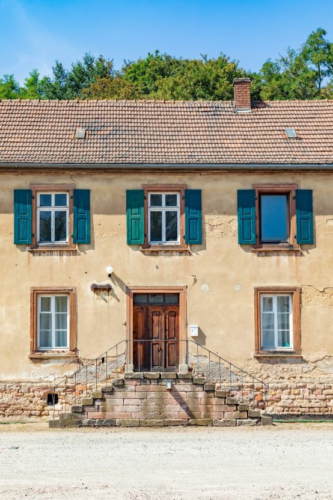
Fig. 2: Rural house in the Mansfeld area;
licence-free image from Adobe Stock.
Two Positive Examples
Against this backdrop, concrete needs and approaches can be identified that highlights the link between narratives of the future and shaping that future. To illustrate this, let us briefly mention two positive examples from two structurally weak regions. In one region (the Mansfeld area), an artist first collected individual narratives through interviews and compiled them into a documentary-style spoken-theatre piece, which was performed by the interviewees in a local community and met with a very positive response. It addresses the structural changes since reunification and highlights – both in the play itself and in the context of the performance – at least four key points: firstly, a strong need for storytelling and thus simultaneously the current lack of shared narratives; secondly, the identity-forming effect of these shared narratives; thirdly, the practical impulses and initiatives that arise from these narratives; and fourthly, the considerable effort required to create these narratives.

Fig. 3: Once a year you can climb to this mining dump close to Sangerhausen (Mansfeld area), Germany.
Licence-free image from Adobe Stock.
In another region (the Uckermark), a cultural project that already possessed a shared narrative demonstrated that this narrative can develop strong social bonds and initiate collective engagement —extending beyond local boundaries and bringing together residents and newcomers. These bonding forces found practical expression, amongst other things, in the ongoing collaborative work on the restoration and revitalisation of a dilapidated estate, as well as in the project-based organisation of smaller and larger events, for which specific themes were set on the initiative of the participants and resources (material, conceptual and financial) were acquired. What links these two different examples is that each featured a “strong” female and “strong” male narrator who, through their narrative, generated cultural production, social cohesion, and collective engagement.
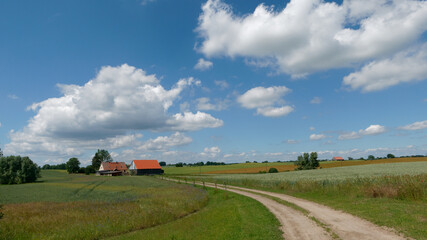
Fig. 4: Uckermark; licence-free image from Adobe Stock.
The Country Needs New Storytellers
From our perspective, the creation of positive futures in and for rural areas depends on such storytellers. Above all, this involves, in particular, creating and communicating (future-oriented) narratives that can simultaneously generate social bonds and guide communal practices. Utopian visions of the future promote civic engagement7; And at the same time, they also depend on spaces for communication8. This requires not only engaging all the usual stakeholder groups in rural areas, often organized within associations (ranging from the volunteer fire department to the men’s choir of the church), but ideally also recruiting and empowering new storytellers who, in turn, can form new stakeholder groups. This also applies to young people, who, prefer and use different forms of expression, not least in light of new media. Accordingly, young people should and must be encouraged differently and much earlier than before to engage with potential futures of their rural regions. This would require promoting and strengthening initiatives that facilitate cooperation between, for example, schools and cultural workers or institutions, and that also create educational materials – with the goal of shaping one’s own future in their respective rural area. Because where no new narratives about one’s own future are created, or where existing narratives are not updated and adapted, then no practical and, above all, proactive (not just reactive) planning and shaping of the future takes place. To put it succinctly: Without narratives, there is no future.
Claudia Neu is professor of rural sociology at the Universities of Göttingen and Kassel. She focuses on demographics, public services, civil society, and extremism in rural areas. More recently her research also covers topics related to loneliness.
Marc Weiland is a researcher at the chair for rural sociology at the University of Göttingen and interim professor for literature at the Hochschule Zittau-Görlitz. He is founder and editor of the series Rurale Topografien: www.transcript-verlag.de/reihen/kulturwissenschaft/rurale-topografien/.
- Hobsbawm, Eric (1995): Das Zeitalter der Extreme. Weltgeschichte des 20. Jahrhunderts. München/Wien. ↩︎
- OECD (2015): Das Jahrhundert der Metropolen. Urbanisierung und ihre Folgen verstehen. Paris. ↩︎
- Neu, Claudia, Marco Eden, and Beate Küpper (2025): “Raum, Daseinsvorsorge und Demokratie,” In: Die angespannte Mitte, edited by Anreas Zick et al., Bonn: p. 254-279. ↩︎
- Mießner, Michael et al. (2024) (eds.): Ländliche Utopien. Herausforderungen und Alternativen regionaler Entwicklungen. Bielefeld. ↩︎
- AMO, and Rem Koolhaas (2020): Countryside, A Report. Köln. ↩︎
- Weiland, Marc (2022): “Die Zukunft auf dem Land? Intermediale Bilder, Narrative, Diskurse,” In: Die Zukunft auf dem Land. Imagination, Projektion, Planung, Gestaltung, edited by Langner, Sigrun, and Marc Weiland, Bielefeld: p. 11-61. ↩︎
- Neu, Claudia, and Ljubica Nikolic (2024): “Zukünfte ländliche Engagements – entgrenzt, kooperativ, jung, demokratisch,” In: Ländliche Utopien. Herausforderungen und Alternativen regionaler Entwicklungen, edited by Michael Mießner et al., Bielefeld: p. 163–175. ↩︎
- Neu, Claudia et al. (2025) (eds.): Kommunikative Orte für ländliche Räume. Konzepte und Praxisbeispiele zur Stärkung der lokalen Gemeinschaft aus Deutschland und Japan. Göttingen. ↩︎
Suggestion to cite this post as follows:
Claudia Neu, Marc Weiland (June 25, 2026). Telling the Story of the Future: Perspectives and Impulses for Rural Areas. sustainability . Retrieved July 22, 2026 from https://sustainability.hypotheses.org/2643